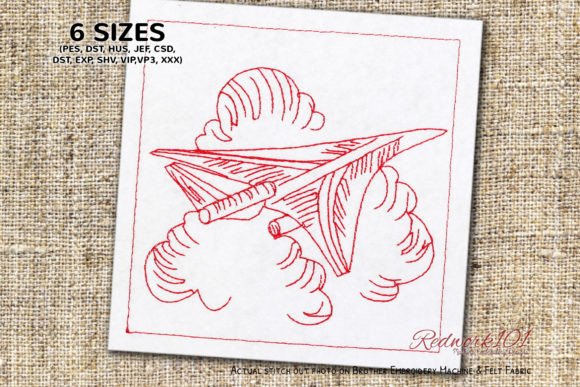
Future Aircraft Design Redwork Review
As an embroidery designer who has spent years curating collections for boutique apparel, I approach every new machine embroidery design with a critical eye. My goal is always to find pieces that elevate a simple garment into a statement piece while maintaining the structural integrity of the fabric. Recently, I came across the Future Aircraft Design Redwork in the Transportation category on Creative Fabrica. Before committing to a full production run for my upcoming seasonal drop, I wanted to analyze how this specific redwork motif performs in a real-world commercial setting.
First Impressions: Visual Personality and Stitching Mood
The first thing that strikes you about the Future Aircraft Design Redwork is its clean, linear aesthetic. Redwork designs are inherently charming because they rely on a single thread color to create depth through line weight and density rather than complex shading or underlay complexity. This particular aircraft motif feels both retro and futuristic, offering a playful yet bold visual personality. It does not scream "industrial"; instead, it whispers "adventure" and "wanderlust."
For a boutique brand, this is crucial. The design avoids the cluttered look often found in generic transportation-themed files. The lines appear smooth, suggesting a moderate stitch density that should sit well on various textures without causing excessive puckering. The mood is casual but polished, making it suitable for everything from streetwear-inspired hoodies to cozy, lifestyle-focused sweatshirts. It possesses a decorative strength that stands out even in monochrome, which is a significant advantage when planning a cohesive color palette for a small shop product line.
Performance on Sweatshirts and Hoodies
When planning a collection centered around custom apparel, the sweatshirt is king. I immediately envisioned the Future Aircraft Design Redwork placed on the left chest of a neutral heather grey sweatshirt. The simplicity of the redwork allows the texture of the fleece to remain visible, adding a tactile quality to the finished product. For a hoodie design, this motif works exceptionally well as a back print. Imagine a pastel lavender oversized hoodie with a large-scale version of the aircraft centered on the upper back. The contrast between the soft fabric and the crisp, directional lines of the plane creates a dynamic visual interest that photographs beautifully for social media graphics and Etsy listings.
However, placement is key. On sleeve accents, the design might need to be scaled down carefully. Because the aircraft has a sense of forward motion, placing it on the sleeve can create a feeling of movement as the wearer moves their arm. For dark garments, such as charcoal or navy hoodies, using a bright white or metallic gold thread instead of traditional red could completely transform the vibe, shifting it from rustic to premium. This versatility is exactly what makes a digital embroidery file a valuable asset for a creative entrepreneur.
T-Shirts, Denim, and Tote Bags
Beyond heavy knitwear, the Future Aircraft Design Redwork translates well to lighter fabrics. On a high-quality cotton t-shirt, the design offers a classic, vintage feel. The lack of dense satin stitching means less tension on the fabric, reducing the risk of holes or tears over time. For denim jackets, this design is a natural fit. Embroidery on denim is a staple of the handmade product market, and this aircraft motif fits perfectly within the rugged, travel-oriented aesthetic of the material.
I also see great potential for tote bag design. A canvas tote is a blank canvas for storytelling, and this redwork adds a touch of whimsy without overwhelming the surface area. It serves as an excellent example of how a single machine embroidery design can diversify a product catalog, allowing an Etsy seller to offer matching sets—think a hoodie, a tee, and a tote all featuring the same iconic symbol.
Navigating Fabric Challenges and Placement
While the design looks promising, any experienced embroiderer knows that execution depends heavily on the substrate. When working with stretchy fabric like ribbed cuffs or the collar of a hoodie, one must be cautious. The Future Aircraft Design Redwork relies on continuous lines; if the fabric stretches too much during hooping, those lines can distort. Always test on scrap fabric first to ensure the stabilizer choice is robust enough to handle the tension.
Dense stitch areas are generally not an issue with redwork, but if you plan to use this on very thick fleece, you may need to adjust your hoop size or use a cutaway stabilizer to prevent the design from sinking into the pile. Curved surfaces, such as the side seams of a sweatshirt, require careful alignment. If the aircraft is meant to fly straight, hooping it at an angle on a curved surface can result in a skewed final image. Furthermore, avoid tiny lettering if you decide to add text below the aircraft; the scale of the redwork lines might make small fonts illegible after stitching.
Enhancing Brand Identity and Product Value
In the competitive world of small clothing brands, professional presentation is non-negotiable. Using a high-quality embroidery file like the Future Aircraft Design Redwork signals attention to detail. It elevates the perceived value of the garment, moving it from a commodity to a collectible item. When customers see a consistent visual identity across their wardrobe—perhaps a series of travel-themed items featuring this specific aircraft—it builds buyer trust and encourages repeat purchases.
This design aids in product recognition. A unique, well-executed logo or motif becomes synonymous with your brand. Whether you are creating printable mockups for your website or shooting lifestyle product photos for Instagram, the clean lines of this redwork ensure that the focus remains on the craftsmanship. It engages customers by telling a story of exploration and creativity, which resonates deeply with the demographic that supports handmade businesses.
Practical Designer Notes for Production
Before integrating this design into your commercial embroidery workflow, there are several practical steps to take. First, confirm the hoop size requirements directly from the Creative Fabrica product details. While redwork is often compact, larger variations might exceed standard 5x7 hoops. Second, review the thread color options. Although it is called "redwork," the magic lies in the thread selection. Test different colors against your specific fabric swatches to ensure adequate contrast.
Inspect the stitch density in your digitizing software if possible, or do a physical test run on a similar garment fabric. Check the stabilizer compatibility; a tear-away might suffice for t-shirts, but a washable cutaway is safer for sweatshirts that will endure frequent laundering. Finally, and most importantly, verify the licensing terms before selling finished apparel. Ensure your subscription or purchase covers commercial use for the volume you intend to produce. Do not assume the license covers unlimited production without checking the specific agreement.
The Future Aircraft Design Redwork offers a compelling blend of style and utility for the modern apparel decorator. Its ability to adapt from a subtle chest logo to a bold back statement makes it a versatile tool in any designer's arsenal. By respecting the technical requirements of the fabric and thread, you can turn this simple redwork motif into a cornerstone of your next successful boutique collection.